









On this page
- Does laser hair removal stop hair for good?
- Can hormones or PCOS make hair grow back after laser?
- Why do hairs show up after a full series?
- Does laser work on light, fine, or gray hair?
- Can spacing sessions too far apart cause regrowth?
- How often do you need touch-ups after laser hair removal?
- What happens at a consult for hair that came back?
- What is the bottom line on hair growing back after laser?
- Frequently asked questions
Hair can grow back after laser hair removal because laser reduces hair. It does not stop every follicle for good. Regrowth usually comes from hormonal changes such as PCOS, follicles that were dormant during your sessions, light or fine hair the laser cannot pick up well, or sessions spaced too far apart. Occasional maintenance visits can keep it in check, and results vary by person.
Does laser hair removal stop hair for good?
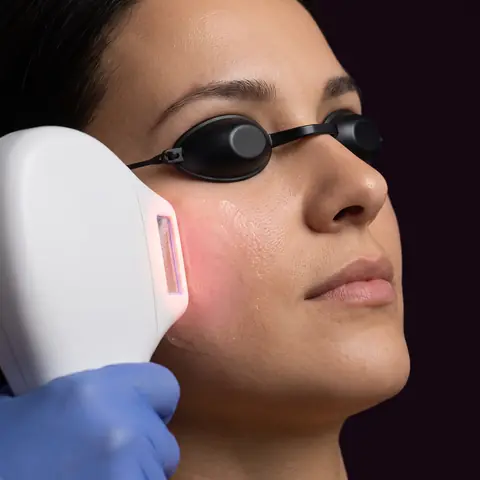
Laser hair removal uses light to heat the pigment in a hair and damage the follicle that grew it. A follicle that takes enough damage grows less hair, finer hair, or no hair. A follicle that takes less damage can recover and grow hair again later.
That is why laser is described as hair reduction. Many people see much less hair after a full series, and the hair that returns is often lighter and slower to grow. Results vary by person. Your hair color, skin tone, hormones, and the area treated all affect how much reduction you get and how long it lasts.
If you are seeing hair again months after your last session, it usually comes from one of the causes below. Most of them can be addressed with a few targeted visits. You can read how we approach treatment on our laser hair removal in Oak Lawn page.
At a glance: common causes of regrowth
| Cause | What you usually notice | What usually helps |
|---|---|---|
| Hormonal changes or PCOS | New dark or coarse hairs on the chin, jaw, or neck | Touch-ups, plus care from your doctor on the hormone side |
| Follicles that were dormant | A few scattered hairs after a full series | A touch-up once those hairs are visible and growing |
| Light, fine, or gray hair | Soft, pale hairs that stay behind | A conversation about electrolysis |
| Long gaps between sessions | Results that seem to stall partway through a series | Getting back to regular spacing |
The takeaway: Laser reduces hair, so some regrowth is normal and usually has a cause you can work on.
Can hormones or PCOS make hair grow back after laser?
Hormones drive a lot of hair growth, especially on the face, chin, neck, and jawline. Androgens can turn fine, soft hair into darker, coarser hair. They can also activate follicles that were not producing hair before. Laser cannot treat a follicle that has not started growing hair yet.
This is common with PCOS. The Office on Women’s Health page on PCOS lists extra hair on the face and body as a common symptom. Many people with PCOS describe shaving their chin pretty much every day and watching hair come back between sessions. Laser can reduce the hair that is there now. As long as hormone levels stay elevated, new hairs may keep appearing over time.
Other hormonal shifts to mention
- Pregnancy
- Starting or stopping birth control
- Perimenopause and menopause
- Some medications
If hormones are part of the picture, work with your doctor on that side while you do laser. A med spa is not a substitute for that care. In the consult we ask about hormones and medications so the plan and the expectations fit your situation.
The takeaway: If hormones are behind new hair, plan on touch-ups and keep your doctor involved.
Why do hairs show up after a full series?
Each hair follicle cycles through stages: an active growth phase, a short transition phase, and a resting phase. Laser works best on hairs in the growth phase. That is when the hair is attached to the follicle and carries the most pigment. Hairs that are resting during a session do not take the same hit.
At any one time, only part of the hair in an area is actively growing. That is the reason a series of sessions is needed instead of one. Even after a full series, a few follicles may have stayed in a resting stage the whole time. When they start growing, you see hair you thought was gone.
These hairs usually respond to a touch-up session once they are visible and growing. Our guide on how many laser hair removal sessions you may need covers the full series in more detail.
The takeaway: A few late hairs after a series often come from resting follicles, and a touch-up usually handles them.
Does laser work on light, fine, or gray hair?
Laser targets pigment. Dark, coarse hair absorbs the light well. Blonde, red, gray, and white hair has little or no pigment, so the laser has less to act on. Very fine hair can also absorb too little energy to damage the follicle.
This often shows up as soft, light hair that stays behind after the darker hair clears. It can also show up later in life as hair turns gray. For hair that laser does not pick up well, electrolysis is one option to discuss. It treats each follicle directly and does not depend on pigment. Our comparison of laser hair removal vs. electrolysis explains the differences.
Fine facial hair can be tricky in another way. In some people, laser on fine hair can stimulate growth instead of reducing it. The provider looks closely at hair type during the consult for this reason.
The takeaway: Hair with little pigment may need a different method, so ask about electrolysis if light hair is what remains.
Can spacing sessions too far apart cause regrowth?
Sessions are spaced to catch hairs as they move into the growth phase. Face sessions are typically spaced closer together than body sessions. That often means around four to six weeks for the face and six to eight weeks or longer for areas like the legs and back. Your provider sets the spacing for your area and your hair.
Long gaps let missed hairs cycle through before the next session. Life gets in the way: a summer of travel, afternoons at the pool, a vacation tan that pushes a visit back. When the gap stretches out, the series can start to feel like it is not working. If you have had a long break, the fix is usually to get back to a regular rhythm, not to start over from zero.
Why going sooner is not the answer
Going too soon does not help either. Hair that has not regrown yet cannot be treated.
Sun and the time of year
Chicago summers mean more sun on arms, legs, and faces. A tan can change which settings are safe for your skin, and skin tone matters for settings too, as our guide to laser hair removal for darker skin explains. Many people in the southwest suburbs start a series in fall or winter so sessions land in the months with less sun. Our laser hair removal prep and aftercare guide covers sun and shaving before visits.
The takeaway: Keep sessions on the schedule your provider sets, and plan around summer sun when you can.
How often do you need touch-ups after laser hair removal?
After a series, some people need nothing for a long time. Others come back for an occasional touch-up when they notice a few hairs returning. There is no single schedule. It depends on your hair, your hormones, and the area.
A maintenance visit is the same treatment as a regular session, usually on fewer hairs. Many people find a touch-up once or a few times a year keeps an area where they want it. People with PCOS or other hormonal causes may need touch-ups more often, especially on the chin and jaw. If facial hair is your main concern, our page on unwanted hair walks through the options.
What happens at a maintenance visit
- You shave the area before the visit, as you did during the series.
- The provider checks your skin and the hair that has come back.
- Settings are adjusted for any changes in skin tone, hair color, or medications.
- The area is treated, and you get the same aftercare guidance as before.
Results vary by person. The goal of maintenance is to keep regrowth light and manageable, not to repeat the full series.
The takeaway: Touch-ups are shorter, simpler visits that keep a treated area where you want it.
What happens at a consult for hair that came back?
Every treatment at Magic FemTouch MedSpa in Oak Lawn starts with a consult. That includes people who had laser somewhere else and are now seeing hair come back. The consult is where the plan gets matched to the cause.
Questions to expect
- When was your last session, and how many have you had?
- Has anything changed with hormones, birth control, pregnancy, or medications?
- Have you been diagnosed with PCOS or another hormonal condition?
- What color and texture is the hair that came back?
- Have you had a reaction to laser before, such as a burn, blisters, or dark spots?
Settings and test spots
Many people do not know the settings a past clinic used. That is common. The provider looks at your skin type and hair before choosing settings. A test spot is one common way to check how skin responds before treating a full area. Better safe than sorry is the right approach with lasers.
What your plan might include
The plan might be a few regularly spaced sessions to catch active hair, or a maintenance schedule. It might also be a conversation about other options if laser is not the best fit for the hair that remains. We see clients from Oak Lawn, Evergreen Park, Chicago Ridge, Burbank, and Orland Park. You can request a laser hair removal consult to talk through your regrowth.
The takeaway: A consult sorts out why hair is returning, so the next step fits the cause.
What is the bottom line on hair growing back after laser?
Some regrowth after laser hair removal is normal, because laser reduces hair rather than stopping every follicle. The usual causes are hormones, resting follicles, light or fine hair, and long gaps between sessions. Each one has a practical next step, from touch-ups to a talk about electrolysis. Results vary by person, and a consult is the place to find out which cause applies to you.
If hair is coming back after laser, book a consult at Magic FemTouch MedSpa in Oak Lawn. We will look at what is causing it and adjust your plan.
Frequently asked questions
Is it normal to see hair in the weeks right after a laser session?
Yes. Treated hairs often shed over the first few weeks after a session, and it can look like the hair is still growing while it pushes out. Let it shed on its own instead of plucking. If hair is still clearly growing well after that window, mention it at your next visit.
Does hair coming back mean my laser didn’t work?
Not usually. Laser reduces hair, and a few hairs returning months later is common, especially with hormonal changes. The returning hair is often lighter and sparser than before. Results vary by person, and a provider can tell you whether a touch-up makes sense.
Is hair that grows back after laser thicker than before?
Most regrowth after laser is finer and lighter than the original hair. In a small number of people, laser on fine hair, often on the face or neck, can stimulate growth instead. If you notice hair getting darker or thicker in a treated area, stop and talk to your provider before your next session.
Can I wax or pluck between laser sessions?
Shaving is the usual choice between sessions. Waxing, plucking, and threading pull the hair out of the follicle, which leaves the laser nothing to target at the next visit. Ask your provider how long to avoid them before a session; our prep guide covers the details.
Can I go back to laser after years without a session?
Yes, many people do. Expect a new consult first, since your skin tone, hair color, hormones, and medications may have changed. The provider will set new settings and spacing based on what your skin and hair look like now.
Should I keep doing laser if I get pregnant?
Many providers postpone laser hair removal during pregnancy as a precaution. Hormone changes during and after pregnancy can also bring new hair that settles down later. Talk to your doctor and your provider about when to resume.
Can laser hair removal be done on darker skin?
Laser can be done on many skin tones, but the type of laser and the settings matter. Darker skin has more pigment competing with the hair, so the provider adjusts the approach and may start with a test spot. Our guide to laser hair removal for dark skin explains what to ask.